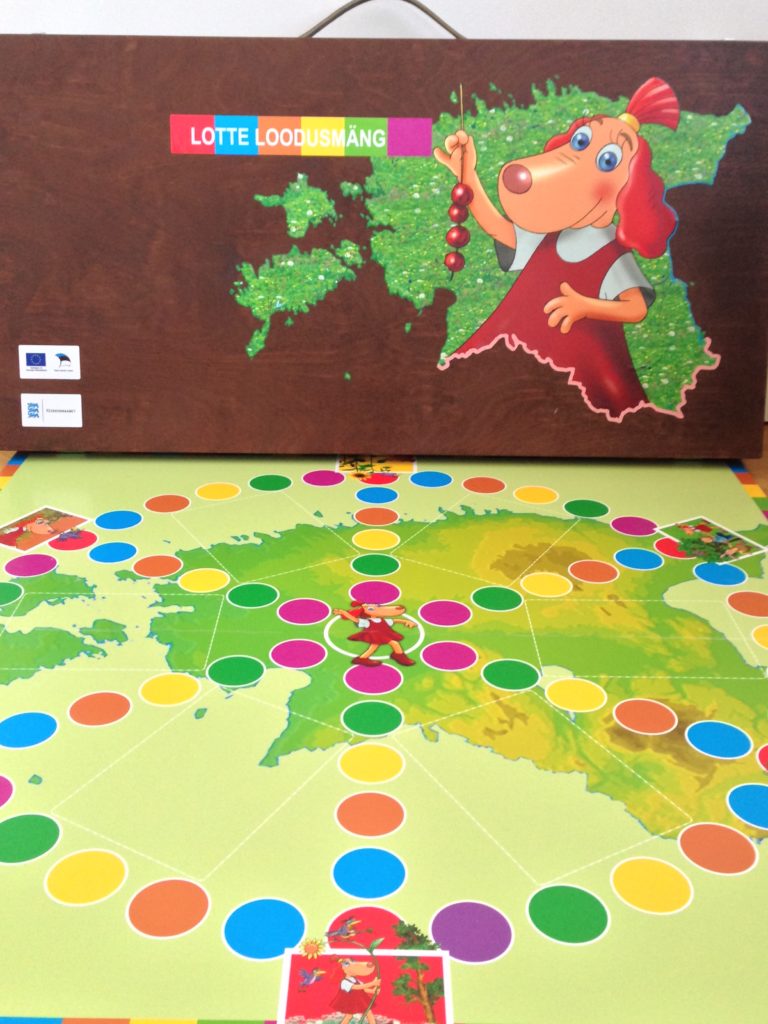
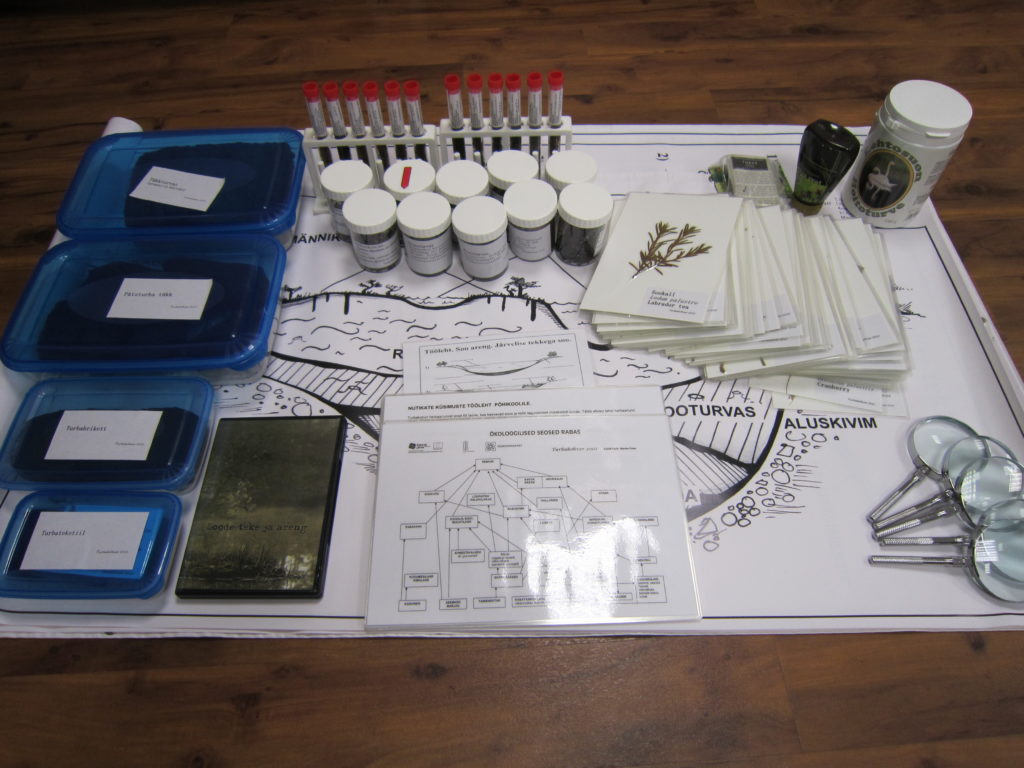
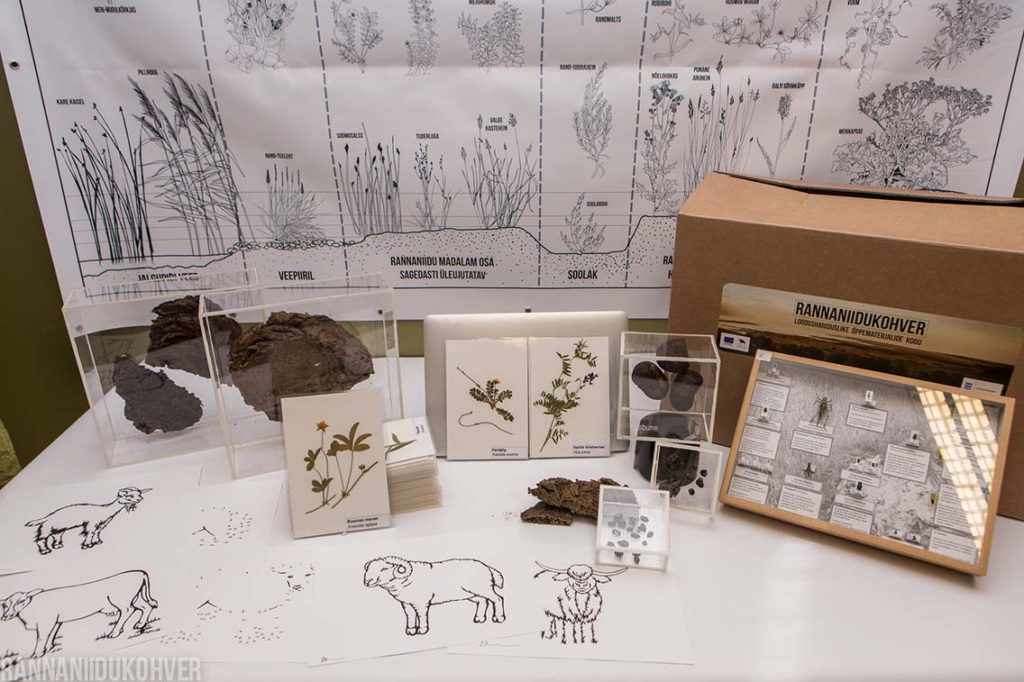
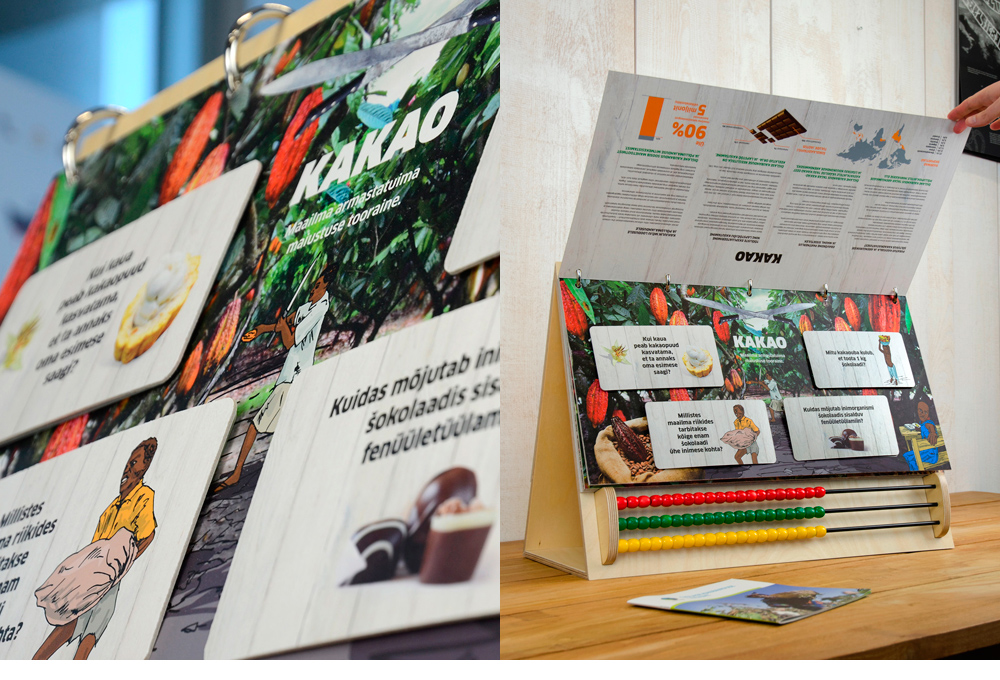
The Tartu Nature House offers exciting traveling exhibits on nature and the environment for schools, preschools, libraries, nature centers, and other institutions.
The selection includes exhibits on biodiversity, insects, urban nature, food production, clothing, bicycle traffic, and the Gulf of Finland. Many exhibits also include educational games, hands-on activities, and worksheets.
Most exhibitions can be packed down for transport. The dimensions, space requirements, and transport conditions for each exhibition are listed in its description.
Renting Traveling Exhibits
Rental fee: 10 € per week
Borrowers: schools, preschools, libraries, nature centers, and other institutions
Transportation: arranged and paid for by the borrower
Rental: by prior agreement and based on a contract
Terms and Conditions for Renting Exhibitions
- A contract is signed with the borrower.
- Transportation costs and the costs of repairing any damage shall be borne by the borrower.
- The borrower is responsible for monitoring and ensuring the security of the exhibits during the exhibition in accordance with the specific conditions of the exhibition.
- The borrower is responsible for reproducing worksheets and other necessary informational materials. We will provide existing files for use.
- Exhibits are packed into boxes and bags for transport. Upon return, the exhibits must be packed in the same manner.
View the price list for services →
Explore the exhibitions available for loan
Click on the title of an exhibition that interests you to view its content, photos, educational materials, and technical requirements.
Growing Your Own Food – Photo Exhibition
The photo exhibition “Growing Your Own Food” tells stories about growing food, gardening, and the relationship between humans and nature.
The exhibition was created based on the results of a pan-European photo contest of the same name held in 2023. Accompanying the photos are the authors’ reflections on the captured moments, as well as brief educational texts on the benefits and unique aspects of organic food production.

Exhibition Themes
- Patterns in the Garden.
- A Close-Up of the Garden.
- The Hard-Working Garden.
- Stories from Educational, Community, and Home Gardens.
- Organic farming and its value.
A total of 1,102 entries were submitted to the photo contest, mainly from Estonia, but also from Latvia, Lithuania, Poland, Slovenia, Spain, Georgia, Montenegro, and the United Kingdom.
Exhibition kit and transportation
- 21 composite photo panels.
- Dimensions of each panel: 74 × 74 cm.
- The panels have hanging loops.
- Worksheets for students at two difficulty levels.
- Four transport bags measuring 85 × 85 × 12 cm.
- Each transport bag weighs approximately 10 kg.
Teaching Materials
Worksheet for grades 4–6 (PDF) →
Worksheet for grades 7–9 (PDF) →
View selected entries from the photo contest →

The photo contest and exhibition were organized as part of the “Growing Our Own Food” project—a core program of Tartu 2024, European Capital of Culture—and the Green School program.
Out of the Closet – Clothes Between Body and Environment
The traveling exhibition “Out of the Closet—Clothes Between Body and Weather” opens up the exciting world of clothing and textiles.
Based on the 2023 summer exhibition, this display explores the origins, history, properties, production, uses, and environmental impact of various materials.

What questions does the exhibition answer?
- What materials are our clothes made of?
- Why can sheep’s wool be felted, but not dog hair in the same way?
- How do different technical textile materials work?
- What kinds of clothing are made from wood, and what kinds from plastic bottles?
- Why do different fabrics require different temperatures when ironing?
- What do clothing labels tell us?
- Who invented the snap fastener, and how did the idea come about?
What can you do at the exhibition?
- Examine textile fibers and fabric types under a magnifying glass.
- Play in the “button sea.”
- Learn about the journey of Malle and Pelle’s clothes.
- Discover the personal stories behind five T-shirts.
- Try out different buttons, clasps, hooks, and snaps.
- Look for and examine clothing labels.
- Try threading a needle and sewing on a button.
- Discuss fashion, consumption, and the future of clothing.
The exhibition also includes simple worksheets.
Space Requirements and Transportation
- The entire exhibition requires approximately 50–60 m² of space.
- Hanging displays require hooks, hangers, or other suitable fasteners.
- The displays can also be placed in public areas, such as the lobby and hallways.
- Interactive exhibits require a supervised space.
- The borrower is responsible for providing the necessary tables, chairs, and electrical connections for the stereo microscopes.
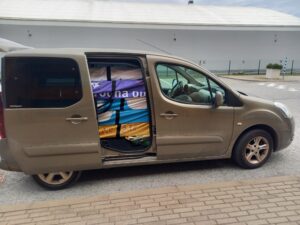
- A covered trailer, van, school bus, or other large vehicle is suitable for transport.
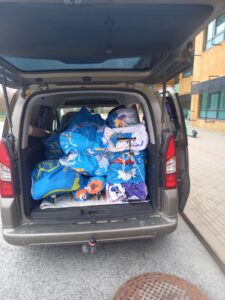
The exhibition components are packed in bags sewn from recycled materials. Transportation is arranged by the borrower. By special agreement, the nature center may provide transportation assistance as a separate service.
Photos of the exhibition
Additional Information and Educational Materials
Exhibition overview and educational materials →
List of available elements and dimensions (PDF) →
The exhibition is in Estonian and English. It is also possible to borrow display panels in only one language.
The creation of the exhibition was supported by the Estonian Research Council.
The Sixth Wave – The Loss of Biodiversity
“The Sixth Wave” is a traveling exhibition about the decline in biodiversity, species extinction, and the human impact on the environment.
The exhibition explores the concept of the Anthropocene, explains the causes of habitat destruction, and invites visitors to consider how they can contribute to the conservation of nature.

Main Themes of the Exhibition
- Extinction of animal and plant species.
- Habitat destruction and change.
- The impact of climate change on biodiversity.
- The environmental impact of industry and human activity.
- The impact of invasive alien species.
- Success stories in species conservation and habitat restoration.
- Everyday ways to preserve biodiversity.
Rental kit
- 14 roll-up displays.
- Commemorative plaques for ten extinct species.
- A set of worksheets for photocopying.
- A set of activities for use at the exhibition.
- Teacher’s guides, which remain with the borrower.
Languages: All exhibition materials are in Estonian and Russian.
Online exhibition and educational materials
The exhibition’s dedicated website features the entire exhibition content, files for the elements available for loan, downloadable worksheets, additional activities, supplementary thematic discussions, and recommendations for eco-friendly choices.
Visit the “Sixth Wave” exhibition website →
The exhibition texts and illustrations were compiled by biologist and conservationist Rein Kuresoo. The exhibition was supported by the Environmental Investment Center Foundation.
Life with Insects – An Insect Exhibition
What would the world be like without insects? What does life look like from an insect’s perspective? What is the relationship between humans and insects?
The interactive exhibition “Life with Insects” invites visitors to discover the world of insects and explore how the living environments of insects and humans are interconnected.
The exhibition is suitable for various age groups. Younger visitors can explore the world of insects with an adult, but even experienced insect enthusiasts will find exciting new insights.

What can you find at the exhibition?
- A tent and a floor mat.
- Three insect-themed fabric puzzles.
- Six hexagonal metal information stands on three hanging brackets.
- Discovery stations with fabric information panels.
- A building block game and an exploration of bee products.
- Insects in glass jars.
- Aliase cards and a rotating life cycle wheel.
- An insect lab with a binocular microscope and Petri dishes.
- A wooden hive filled with fascinating facts.
- Slide presentation, laminated exhibition guide, and worksheets.
Watch the video
Introductory video for the insect exhibition on YouTube →
The exhibition texts and photos were created by entomologist Urmas Tartes. The project manager is Krista Tomson. Two copies of the exhibition have been produced; the second copy is located at the Sagadi Forest Center.
I’m Not a Visitor, I Live Here – Urban Nature
The playful urban nature exhibition “I’m Not a Visitor, I Live Here” invites you to notice the plants and animals with whom we share the urban environment.
The exhibition introduces humans’ natural neighbors and offers an opportunity to reflect on for whom and how we design the city. What kind of living environment is suitable for people, and what kind for the other species living in the city?

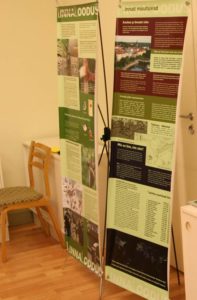
1. Ten display panels
The displays explore the formation and development of cities, environmental issues, and the city as an artificial ecosystem. The exhibition examines the needs of plants and animals living in the city, as well as various habitats: gardens, parks, cemeteries, tree-lined avenues, and bodies of water.
The exhibition also addresses hemerobiosis—that is, how species respond to human activity and adapt to human impact.
2. Urban Species Register
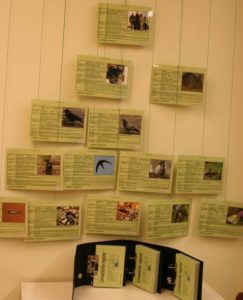
The registry introduces the plant, fungus, and animal species living in cities, along with their habitat requirements, lifestyles, reproduction, and other characteristics.
The registry is presented at the exhibition as a registry tree and in folders, allowing visitors to explore who actually lives in our city.
3. Hemerometer
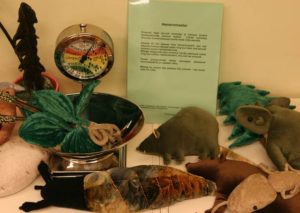
The Hemerometer is a playful measuring tool created for the exhibition to explore the attitudes of 20 plant and animal species toward human activity.
Participants can predict how tolerant different species are of humans and then compare their results on the hemerometer. Examples include the rock pigeon, flying squirrel, house sparrow, European ant lion, and several other species.
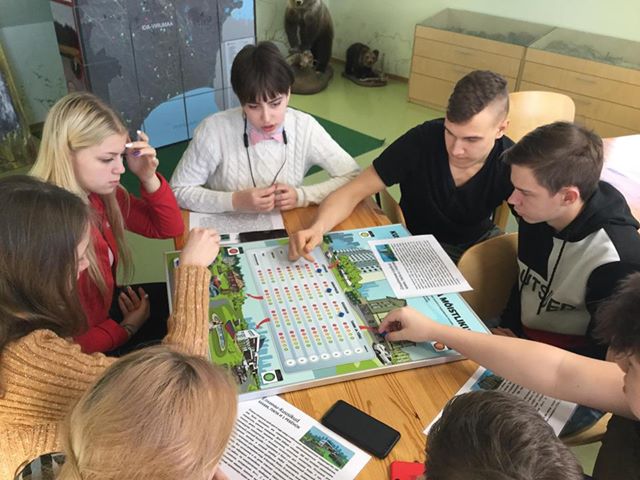
4. Urban Planning Game
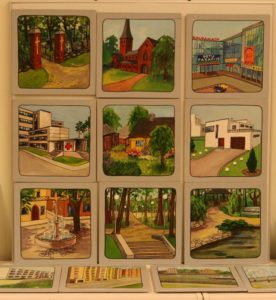
The urban planning role-playing game offers the opportunity to design a city while taking into account the needs of both humans and other species.
What would happen if a hedgehog, a beaver, a bat, a ground squirrel, and other city residents could have a say in urban planning discussions?
In the game, you must make choices with limited options. Should you build new houses, construct a shopping center, or preserve a park instead?
Recommended number of players: 5–22 people at a time. You can also try a simplified version of the game with a smaller group or on your own.
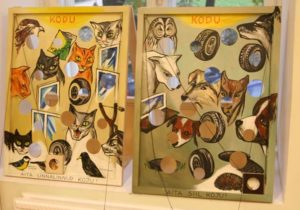
5. Skill Games: “Dangers in the City”
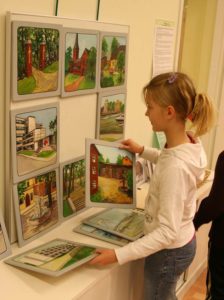
In these skill-based games, participants help a hedgehog, a squirrel, and birds make their way home through a dangerous urban environment.
The games encourage players to think about the dangers different species face in the city and how we can make the living environment safer for everyone.
6. Sounds and Noise
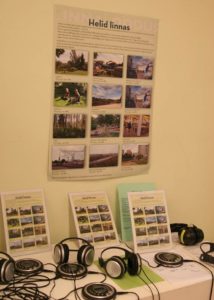
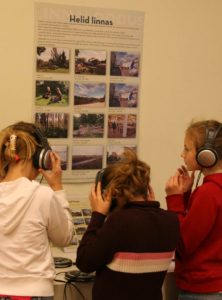
The audio section of the exhibition introduces the soundscapes of Tartu and its surroundings.
You can listen to various sounds from urban nature, public spaces, and natural habitats. We explore what noise and silence are, and how sounds affect the well-being of people and other urban inhabitants.
A noise meter was used to characterize the soundscapes.
Educational Materials
You can visit the exhibition briefly or delve deeper into the worksheets, games, and hands-on activities.
Urban Nature Exhibition Worksheets (DOC) →
Urban Planning Worksheet (DOC) →
The exhibition was created in collaboration with natural scientists, artists, and other creative professionals. The exhibition coordinator is Annelie Ehlvest. The following individuals contributed to the creation of the exhibition: Rein Kuresoo, Epp Margna, Veljo Runnel, Liina Margna, Toomas Kalve, Eleonora Kampe, Peeter Laurits, Leelo Laurits, Paavo Pedmanson, Kati Naarits, Liina Tuulik, Arne Ader, Lea Tuvikene, Urmas Tartes, Aivo Tamm, Sulev Kuuse, Arvi Tragel, Vello Liiv, Vallo Kalamees, Merike Linnamägi, Liis Sipsaka, Val Rajasaar, Mart Jüssi, Mari Jüssi, Janika Ruusmaa, Kersti Sõgel, Tiina Viiol, Kalju Eit, Eva-Liisa Orula, Anneli Ehlvest, Helle Kont, Sirje Janikson, Ene Örd, Jaanus Elts, and others.
8 Reasons Why I Prefer to Ride a Bicycle
The traveling exhibition “8 Reasons Why I Prefer to Ride a Bicycle” is primarily intended for elementary school students.
The exhibition highlights the benefits of daily cycling, safe cycling practices, and important traffic rules for cyclists.

Exhibition Kit
- 11 PVC panels.
- A spring-loaded stand.
- A bicycle-themed card game.
- Over 30 different educational materials, including textbooks, worksheets, brochures, and DVDs.
Languages: The exhibition is also available in Russian.
The exhibition’s educational materials facilitate discussions about traffic safety, eco-friendly transportation, and the benefits of cycling.
Gulf of Finland Year 2014
The traveling exhibition “Year of the Gulf of Finland 2014” was created as part of the international Year of the Gulf of Finland.
The exhibition showcases the biodiversity, environmental status, marine research, and historical trade and cultural ties of the Gulf of Finland.
The aim of the exhibition is to draw attention to the uniqueness and vulnerability of the Gulf of Finland and the need for cooperation in preserving the marine environment.

Exhibition Themes
- The Gulf of Finland’s catchment area and biodiversity.
- The state of the marine environment and how it is changing.
- Modern marine research methods.
- Environmentally friendly consumption habits.
- Shipping and maritime transport.
- The region’s historical trade and cultural ties.
Items Available for Loan
- Two metal frames measuring 84 × 197 cm, to which six textile posters can be attached.
- A textile poster measuring 100 × 300 cm titled “One Bay, Three Countries—Millions of Joys and Challenges!”
- A textile promotional poster measuring 144 × 150 cm.
- Exhibit “Quotes.”
- Exhibit “Interesting Science,” which requires approximately 100 × 120 cm of table space.
- Exhibit “What Can I Do?”, which requires approximately 100 × 100 cm of table space.
- Floor game “Life in the Gulf of Finland.”
Space Requirements and Transportation
- The exhibition requires at least 20 m² of floor space.
- The exhibition is packable and transportable.
- Exhibits can also be rented as separate modules.
- The exhibition is suitable for both students and adults.
Educational Materials
Exhibition Worksheets – Questions (PDF) →
Exhibition Worksheets – Answers (PDF) →
The exhibition was developed in collaboration with organizations from Estonia, Finland, and Russia. The Estonian partners were the Environmental Board, the Estonian Museum of Nature, and the Tartu Environmental Education Center. The production of the exhibition was supported by the Environmental Investment Center Foundation.
How to borrow the exhibition?
Would you like to bring an exhibition to your school, preschool, library, or nature center? Contact us to inquire about the exhibition’s availability, as well as the terms for transportation and installation.
In your inquiry, please include the name of the exhibition you’d like to borrow, the loan period, the name and location of your institution, and your contact information.
How do I borrow an exhibition?
Would you like to bring an exhibition to your school, preschool, library, or nature center? Contact us to inquire about the exhibition’s availability, as well as transportation and installation requirements.
In your inquiry, please include the name of the exhibition you’d like to borrow, the loan period, the name and location of your institution, and your contact information.
Would you like to borrow other resources suitable for educational activities?
See the loan program for educational resources and nature games →