Environmentally Friendly Public Events
Organizing any festival, concert, sporting event, conference, or other public event has an impact on the environment. We use energy and materials, arrange transportation, provide food and beverages, and generate waste.
With well-thought-out planning, this impact can be reduced. An environmentally friendly event does not necessarily require more complex solutions—often, the most important factors are making informed choices, collaborating with service providers, and planning activities well in advance.
Tartu Nature House provides event organizers with practical guidance materials, signs for sorting waste, and recommendations. You can also borrow waste bins from us and ask for advice on organizing an eco-friendly event.
Organize a More Environmentally Friendly Event
Guides: Practical Materials and Checklists for Event Organizers
Separate waste collection: guides, signs, and waste bins available for loan
Waste bin rental: €5 per bin (including lid) for up to one week
Additional services: consulting, training, and project management by arrangement
Where to start?
You can make eco-friendly choices throughout the entire event planning process. The decisions with the greatest impact are often made early in the planning stage.
- Location and transportation. Choose an accessible venue and encourage attendees to arrive on foot, by bike, or via public transportation.
- Catering and drinking water. Plan appropriate food quantities, prioritize local and seasonal food whenever possible, and provide the option to refill drinking water.
- Reusability. Use reusable dishes, decorations, signs, and other organizational materials.
- Waste sorting. Create a clear sorting system and clearly label collection points.
- Energy and Materials. Avoid unnecessary printed materials, prioritize the use of existing resources, and plan energy use thoughtfully.
- Communication and collaboration. Explain eco-friendly principles to visitors, staff, and service providers.
- After the event. Evaluate what went well and use the lessons learned when organizing the next event.
Important: Starting January 1, 2024, reusable dishes and cutlery must be used when serving food and beverages at public events in Estonia. Disposable tableware, including compostable disposable tableware, does not satisfy the requirement for reusable tableware.
Read more about the requirements for reusable tableware →
Guides and Practical Resources
Below you will find both the latest national guidelines and materials compiled during Tartu Nature House’s previous projects.
Guidance Materials for Environmentally Friendly Events
National Guidelines for Environmentally Friendly Events
Published by the Ministry of Climate in 2025, this guide helps organizers make environmentally friendly choices before, during, and after an event.
Among other things, the guide covers transportation, use of materials, energy consumption, catering, waste management, accessibility, and communication.
The national guide’s website also includes checklists for various types of events, as well as labels and informational materials for use.
National Guide and Checklists →
Tartu Nature House Guide for Event Organizers
This guide, developed as part of the Tartu Nature House project, provides an overview of best practices for organizing environmentally friendly public events and presents four practical examples.
The guide helps you analyze the organization of your event and identify areas where you can focus on reducing its environmental impact.
Tartu Nature House Guide – October 2020 (PDF) →
This is older project material. For legal provisions and current requirements for public events, please refer to the most recent national guidelines.
Collaboration and Sharing Experiences
You can also share your experiences, recommendations, and information about service providers regarding the organization of eco-friendly events with other organizers.
Facebook group “Green Events” →
Joint document on environmentally friendly products and service providers →
Guidelines and labels for separate waste collection
A clearly labeled waste collection system helps visitors and the organizing team sort waste correctly.
When planning the sorting system, consider the types of waste generated at the event, the locations of collection points, and where the collected waste will be sent.
Downloadable Materials
- Guide to Waste Sorting (PDF) →
- Kuhuviia.ee sorting instructions →
- Signs for Separate Waste Collection – 2019 Materials →
- Tartu Nature House educational and informational materials →
The latest waste sorting labels, signs, and print files can also be found on the national guidelines website.
View national labels and signs →
Example of waste sorting labels
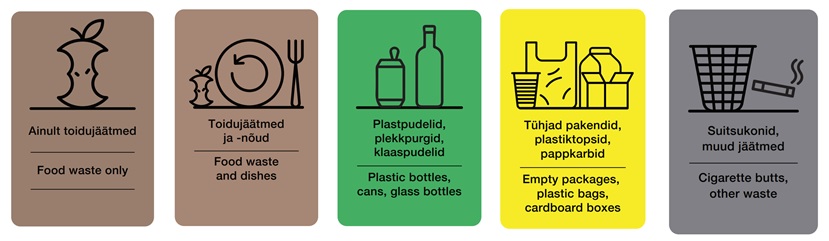
Rental of Waste Bins and Lids
Tartu Nature House offers waste bins designed for waste sorting, complete with labeled lids, for loan.
The bins are suitable for festivals, fairs, sports competitions, seminars, and other events where it is necessary to create a waste sorting system that is easy for visitors to understand.
Rental Details
Price: 5 € per bin with a lid for up to one week
Number of frames: 11
Cover dimensions: 62 × 62 cm
Frame height: approximately 1 m
Diameter of the bottom of the frame: approximately 80 cm
What types of lids are available?
Lids marked with five waste categories are available for the waste bins:
- Packaging waste.
- Deposit packaging.
- Organic waste.
- Compostable tableware (previous labeling).
- Household waste.
There are three lids for each of the listed waste types. The frames and lids can be combined according to the event’s needs and the availability of resources.
Note: The labeling on the compostable tableware is part of an earlier set. At public events, reusable tableware is required when serving food and beverages; compostable single-use tableware is not sufficient to meet this requirement.
Practical Arrangements
- 200-liter trash bags are required to use the waste bins.
- The bags are provided by the rental company.
- It is recommended to use yellow bags for mixed packaging.
- For other types of waste, suitable transparent bags may be used.
- The number of bins and lids, as well as the terms for pickup and return, will be agreed upon at the time of rental.
Photos of waste frames
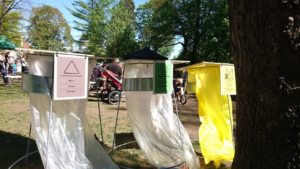
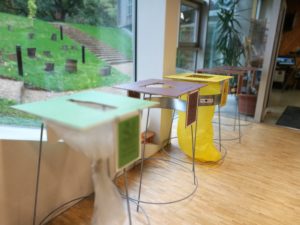
Pictured: a waste frame with a lid and waste sorted by type.
Rental
To rent waste bins, please email us the desired dates, the number of bins needed, and the types of waste.
Email: info@tartuloodusmaja.ee
Phone: +372 736 6120
The purchase of waste bins and lids was supported by the Estonia-Latvia Cooperation Program and the Environmental Investment Center Foundation.
Seminar Presentations and Materials 2018–2019
Tartu Nature House has organized and facilitated seminars and brainstorming sessions on the topic of environmentally friendly events. Here you will find presentations, summaries, and videos from previous meetings.
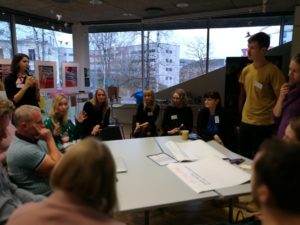
October 31, 2019 – Seminar and Brainstorming Session on Environmentally Friendly Events
The seminar held at Tartu Nature House focused on reducing waste at public events, reuse, and practical organizational solutions.
The panel discussion was moderated by Raimo Matvere. Participants included Toomas Laimets, project manager at the Väätsa Landfill; Made Saadve, advisor at the Ministry of the Environment; and Tõnu Tupits, head of the Waste Management Department at the Tallinn Enterprise Board.
The second part of the seminar featured brainstorming sessions in a “world café” format, where participants discussed new services, sponsorship, and challenges related to waste management and labeling.
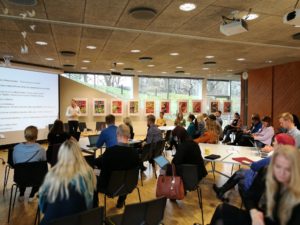
Introduction and overview of the seminar (PDF) →
Summary of the panel discussion and brainstorming sessions (PDF) →
August 21, 2019 – Kultuurikompass
The seminar “How to Organize Culture in an Environmentally Conscious Way?”, organized by the City of Tartu, showcased experiences from both major festivals and smaller events.
Watch the seminar presentations on YouTube →
March 15, 2019 – Discussion on Single-Use Plastic Products and Biodegradable Tableware
A meeting held at the Estonian Museum of Nature discussed alternatives to single-use plastic products, the properties of biodegradable and compostable tableware, and their waste management.
Presentations were given by Kristel Murumaa from the Ministry of the Environment and Mait Kriipsalu from the Estonian University of Life Sciences.
Replacing Single-Use Plastic Products (PDF) →
Biodegradable! Biodegradable? (PDF) →
Summary of the Discussion (PDF) →
The materials reflect the 2019 discussion. The current requirements for reusable tableware at public events have since changed.
October 5, 2018 – Environmentally Friendly Public Events
A seminar organized with the support of an Estonian-Latvian cooperation project brought together Estonian festival organizers.
Participants discussed ways to reduce the environmental impact of events, and the Viljandi Folk Music Festival, I Land Sound, Surfilaager, and the Tallinn and Tartu street food festivals shared their experiences.
Consulting and Collaboration
Would you like to make your festival, seminar, sporting event, or other public event more environmentally friendly?
You can contact the Tartu Nature House to explore opportunities in the following areas:
- Consultation on planning an environmentally friendly event.
- Training and practical recommendations for the organizing team.
- Project management and collaboration in implementing eco-friendly solutions.
- Planning a system for separate waste collection and renting waste bins.
Please email us the name of your event, the date and time, the estimated number of participants, and any questions you may have. We can then specify what solutions and collaboration opportunities we can offer.
Email: info@tartuloodusmaja.ee
Phone: +372 736 6120
See also
If you’re looking for a suitable venue or want to organize an eco-friendly event at Tartu Nature House, check out our rental options.