Biodiversity in the Tartu Nature House Park
The biodiversity of the Tartu Nature House park offers the joy of discovery in every season. Located at Lille 10, this species-rich park is home to over 80 species of trees and shrubs and more than 200 species of herbaceous plants. Here, you’ll find old, native trees, diverse planting areas, birds, mushrooms, and a small pond.
The park serves both as a habitat for many species and as a nature education environment where visitors can learn about Estonia’s native plants as well as non-native species used in landscaping.
Pond, Mushrooms, and Birds
Pond
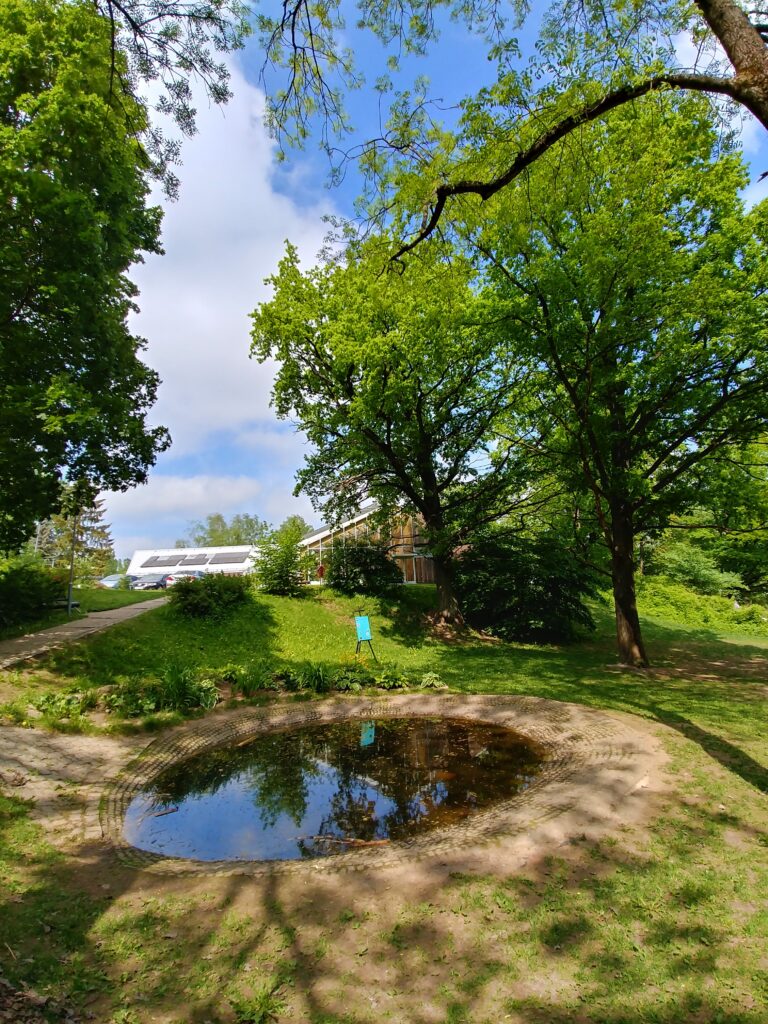
The small pond in Loodusmaja Park is a man-made body of water where rainwater collects. Rainwater from the walking trail on the hillside is also directed into the pond. The pond provides a drinking spot for birds and serves as a habitat for various small aquatic organisms.
Mushrooms
Approximately 20 species of mushrooms have been found and identified in the park during previous surveys. Among them are the oak bolete, the birch bolete, and the golden bolete, as well as various parasol mushrooms, ink caps, the grass mushroom, and the death cap. During mushroom exhibitions, some of the mushrooms growing in the park are temporarily marked.
Birds
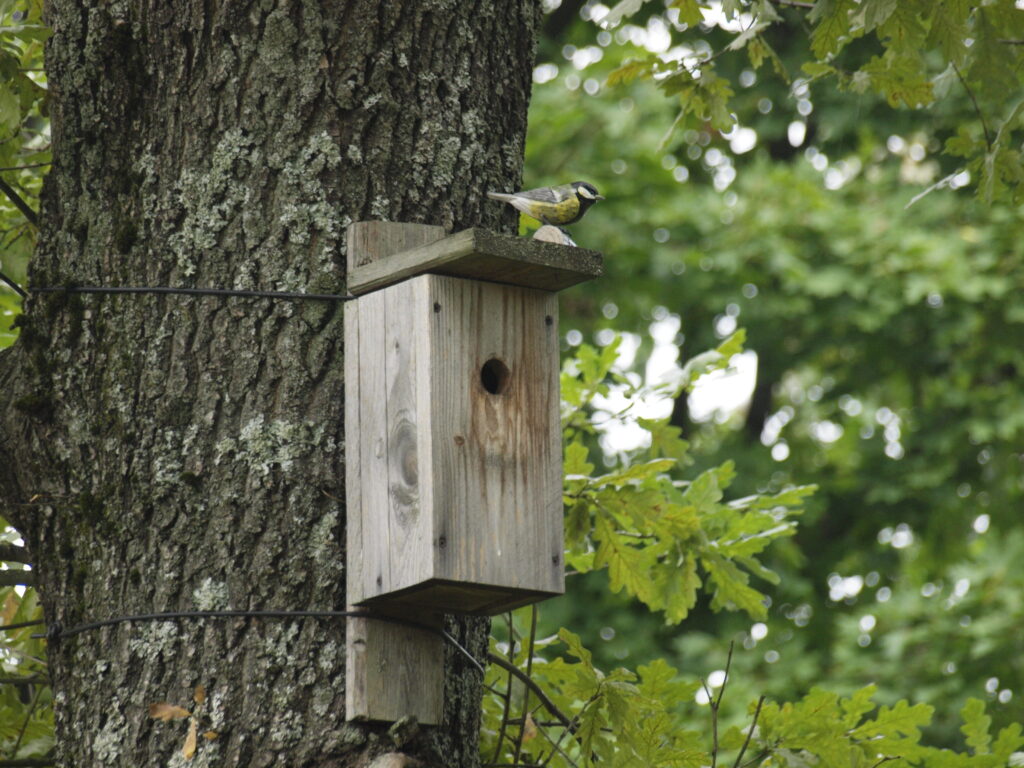
In the Nature House park, you may encounter species typical of urban environments, such as the great tit and blue tit, the gray jay, the field sparrow and house sparrow, and the greenfinch. During the previous five-year observation period, a total of 46 bird species were recorded in the park or flying over it.
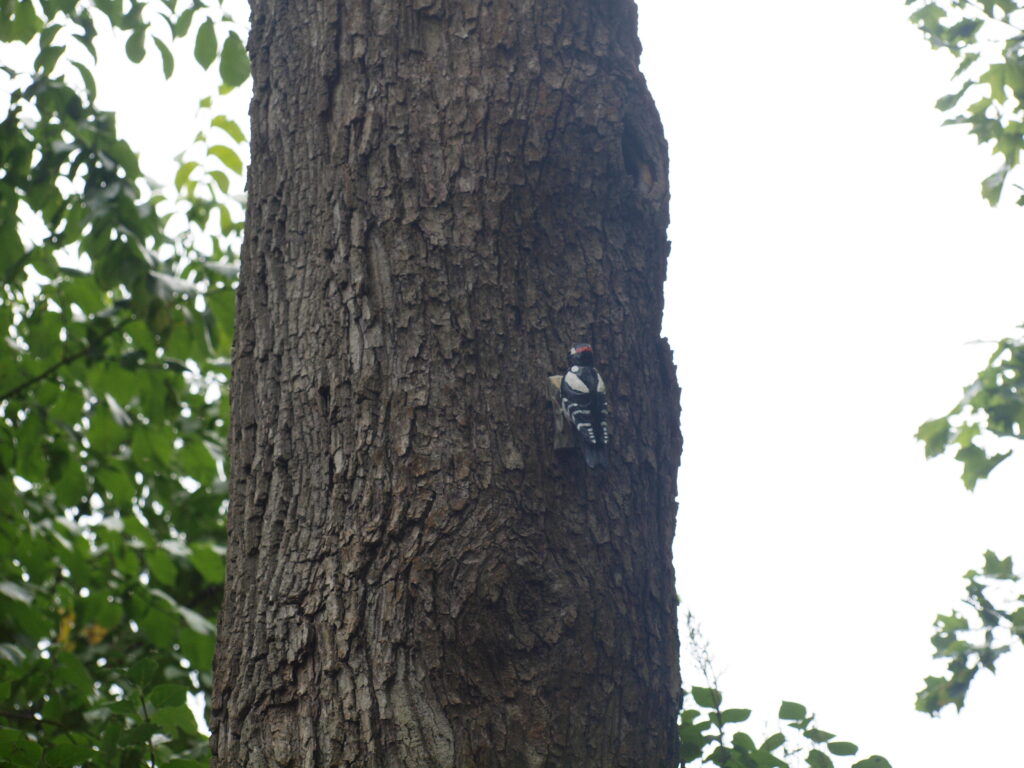
Wooden bird figures representing eight species, attached to trees in the park, help young nature observers practice using binoculars and spotting birds.
Special Trees in the Park
Several remarkable trees grow in the Nature House park, telling stories about both the park’s history and the importance of old trees to biodiversity.
Balsam Fir
The balsam fir (Abies balsamea) growing in front of the Nature House is native to North America. This tree holds special significance for the Nature House: the original location of the new building was changed so that this majestic tree could continue to grow.
English Oak
Behind the Nature House grows a common oak (Quercus robur) that is several hundred years old and estimated to be approximately 400 years old. It is one of the park’s most remarkable ancient trees. Since 1986, the oak has been listed among Tartu’s protected ancient trees.
Old Norway maple
The Norway maple (Acer platanoides) growing in the park is an important habitat tree. Old trees provide habitats for mosses, lichens, fungi, insects, birds, and small mammals. Species associated with this maple include, for example, woodpeckers, the great spotted woodpecker, titmice, and many insect species.
Planting Areas and Educational Beds
The various planting areas in the Nature House park allow visitors to learn about plants’ growing conditions, origins, and uses. The beds are designed so that plants can be observed and used in hands-on learning activities.
Shade Garden
The shade garden primarily features shade-loving plants that occur naturally in Estonia, such as common lungwort and ferns. Among them are the common wood fern and the staghorn fern. Alongside native plants, there are also non-native ornamental plants that prefer similar conditions.
Peat Bed
The peat bed showcases plants that prefer an acidic and moister growing environment, such as those found in bogs. Here, blueberries, lingonberries, bilberries, heather, and cranberries grow, as well as dwarf birch and dwarf mountain ash. Rainwater is channeled from the walking paths into the bed to keep the soil moister.
Fruit Orchard
The park features a preserved historic fruit orchard with apple, plum, and sweet cherry trees. Next to them are various berry bushes, including black chokeberry, black, red, and white currants, and garden gooseberries. The fruit garden helps introduce edible plants and their cultivation and use.
Rock Garden
In the rock garden, you can see plants that prefer sunny and well-lit growing conditions. For example, Caucasian goose grass, rock cress, and white rock cress grow here.
Slope Garden
The slope garden showcases various shrub species, such as common mock orange, common rosehip, common rowan, and common lilac.
Edible Garden Beds
The edible gardens help visitors learn about edible, aromatic, and medicinal plants, and practice growing, weeding, and harvesting plants. The park has three edible gardens, each with a different purpose.
Health Garden
Here you can learn about medicinal plants such as peppermint, sage, lemongrass, nettle, and tea leaves.
Edible Garden
Here, vegetables such as squash, tomatoes, turnips, and leafy greens are grown.
Aromatic Garden
Here you can learn about herbs such as garden parsley, rosemary, and chives.
Herb Pyramid Bed
The park also has a separate pyramid bed for growing herbs. Among other things, basil, various types of chives, and dill are grown there, which are used in the Nature House kitchen.
The species and crops grown in the garden beds may vary by season.
Explore the Nature House Park
In addition to its rich biodiversity, the park offers a variety of opportunities for exploring nature and learning outdoors. Learn more about the park area and its educational opportunities.